
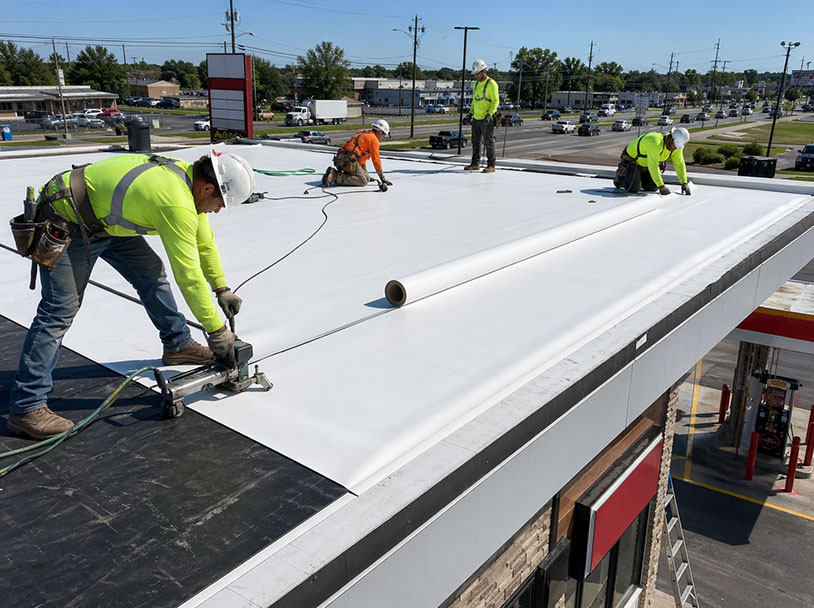
If you own or manage a large commercial or multifamily building in Denver, a roof replacement may involve more than choosing a new roofing system. Denver’s Green Buildings Ordinance can affect how the project is planned, permitted, and completed.
The ordinance is designed to reduce the environmental impact of larger buildings and renovations. For many qualifying projects, that means installing a cool roof and reviewing the available compliance options before work begins.
What Is Denver’s Green Buildings Ordinance?
Denver’s Green Buildings Ordinance, often called the GBO, applies to certain larger buildings and projects in the City and County of Denver. The ordinance was created to support more sustainable development, reduce heat island effects, improve stormwater management, increase green space, encourage renewable energy, and promote more energy-efficient buildings.
For roofing projects, the most important takeaway is this: if your building is large enough and your roof project meets the ordinance threshold, your replacement or recover may need to include a cool roof.
Who Needs to Pay Attention to the Ordinance?
The Green Buildings Ordinance applies to many Denver buildings and projects that are 25,000 square feet or larger.
That can include:
- New buildings
- Building additions
- Roof permits for existing buildings
- Roof replacements or roof recovers on qualifying existing buildings
For existing buildings, this often becomes relevant when a commercial owner or property manager is planning a roof replacement or roof recover. If the project affects enough of the roof, the cool roof requirement may apply.
What Is a Cool Roof?
A cool roof uses roofing materials designed to reflect more sunlight and absorb less heat than darker traditional roof surfaces. In commercial roofing, that often means a reflective white or light-colored roof membrane or coating system.
Common cool roof options may include systems such as TPO, PVC, certain roof coating systems, and other roofing products that meet the required solar reflectance standards for the project.
For building owners, a cool roof is not just a design choice. On qualifying Denver projects, it can be part of the permit and compliance process.
Does the Ordinance Require a Vegetated Green Roof?
Not necessarily. This is where many people get confused.
Denver’s original public discussion around the ordinance involved green roofs, but the current Green Buildings Ordinance gives owners and project teams a more flexible menu of compliance options. Depending on the project, the options may include green space, solar or renewable energy, energy efficiency improvements, green building certification, or other approved compliance paths.
For many roof replacement projects, the immediate roofing question is whether the project must include a cool roof. The larger compliance path may depend on the type of project, the building size, and the specific requirements that apply.
Why This Matters Before a Roof Replacement
If you wait until the roof project is already underway, compliance questions can slow down permitting, create confusion, or affect the roofing system selected for the building.
Before replacing a commercial roof in Denver, owners and managers should consider:
- The building’s square footage
- Whether the property is located within Denver
- Whether the project is a replacement, recover, addition, or new construction
- How much of the roof area will be affected
- Whether the chosen roofing system meets cool roof requirements
- Whether additional sustainability options apply
This is especially important for large commercial buildings, apartment and multifamily properties, retail centers, office buildings, schools, churches, industrial buildings, and warehouses.
Roofing Systems That May Help Meet Cool Roof Requirements
Many modern commercial roofing systems are available in reflective colors and may be used as part of a cool roof strategy when they meet the applicable standards.
Possible roofing options may include:
- TPO roofing
- PVC roofing
- Reflective roof coatings
- Certain approved low-slope commercial roofing systems
The right system depends on the building. A restaurant roof with grease exposure may call for PVC. A warehouse may be a strong candidate for TPO. An existing roof in serviceable condition may be a candidate for a coating system. The best choice depends on the roof condition, building use, drainage, rooftop equipment, budget, and long-term plan for the property.
Work With a Contractor Who Understands Commercial Roof Planning
Denver’s Green Buildings Ordinance makes roof planning more important. The roofing system, permit process, roof area, and building use all need to be considered before the project is finalized.
Statewide Roofing helps commercial property owners and managers evaluate roof condition, compare system options, and plan replacement or recover projects with the building’s needs in mind. If your Denver building may be subject to the Green Buildings Ordinance, we can help you think through roofing options that support your project goals.
Planning a Commercial Roof Replacement in Denver?
If your commercial or multifamily building is 25,000 square feet or larger and you are considering a roof replacement or recover, it is worth reviewing Denver’s Green Buildings Ordinance early in the planning process.
Statewide Roofing can inspect your roof, discuss cool roof options, and help you determine the right next step for your building.
Schedule a Commercial Roof Inspection